Why does my child lose focus after 15 minutes in class?
Published: · BrainLab 360
Your brain uses about a fifth of your body’s oxygen. If a child breathes shallowly at the desk, the brain can tire quickly, even in a child who has plenty of energy on the field. Checking lung capacity and breathing habits is a simple, painless first step.
The puzzle many parents notice
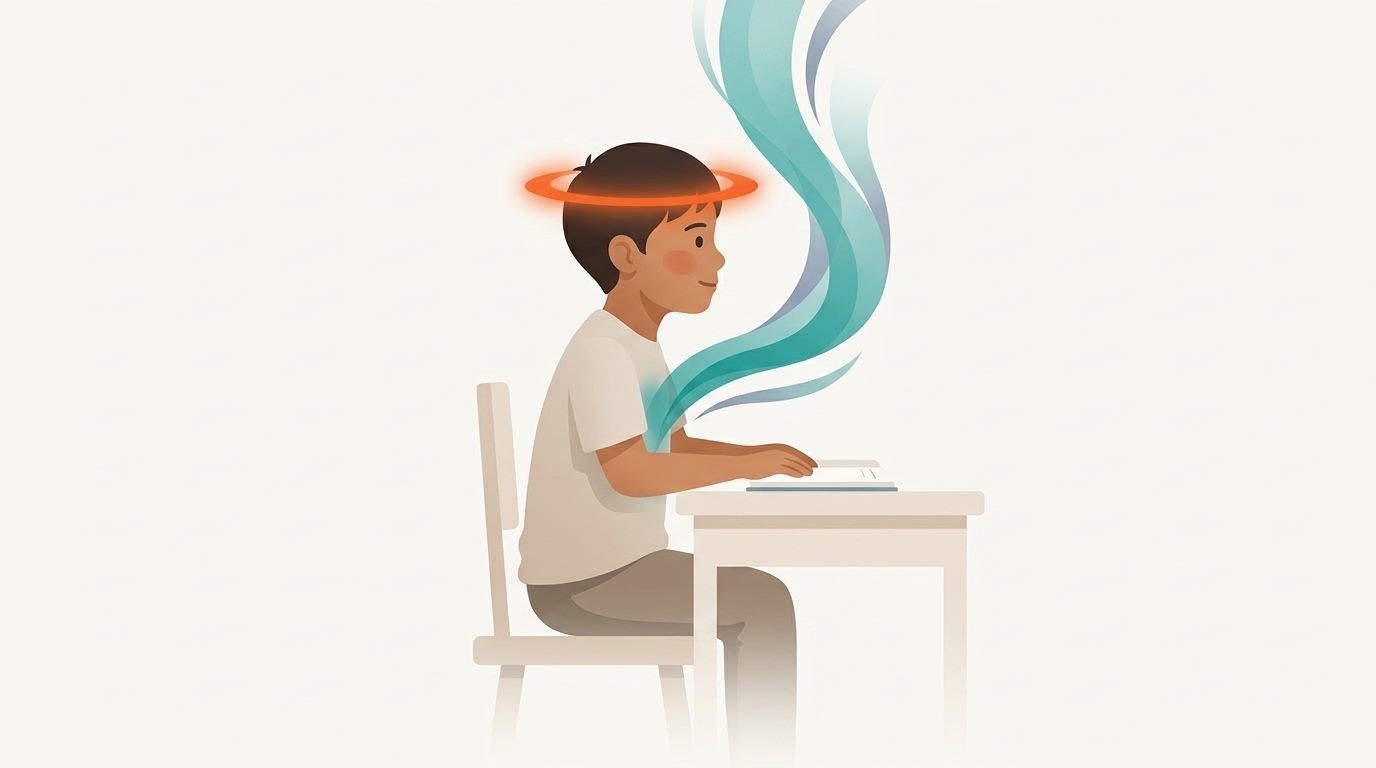
Your child runs around at the playground for an hour, yet in class they start yawning, slumping or drifting off within 15 minutes. It is easy to think they are “lazy” or “not interested”. Often something more physical is going on.
Your brain is an oxygen-hungry organ
The brain makes up only about 2% of body weight but uses roughly 20% of the body’s oxygen. The front part of the brain, which helps with attention, planning and self-control, works hardest during schoolwork.
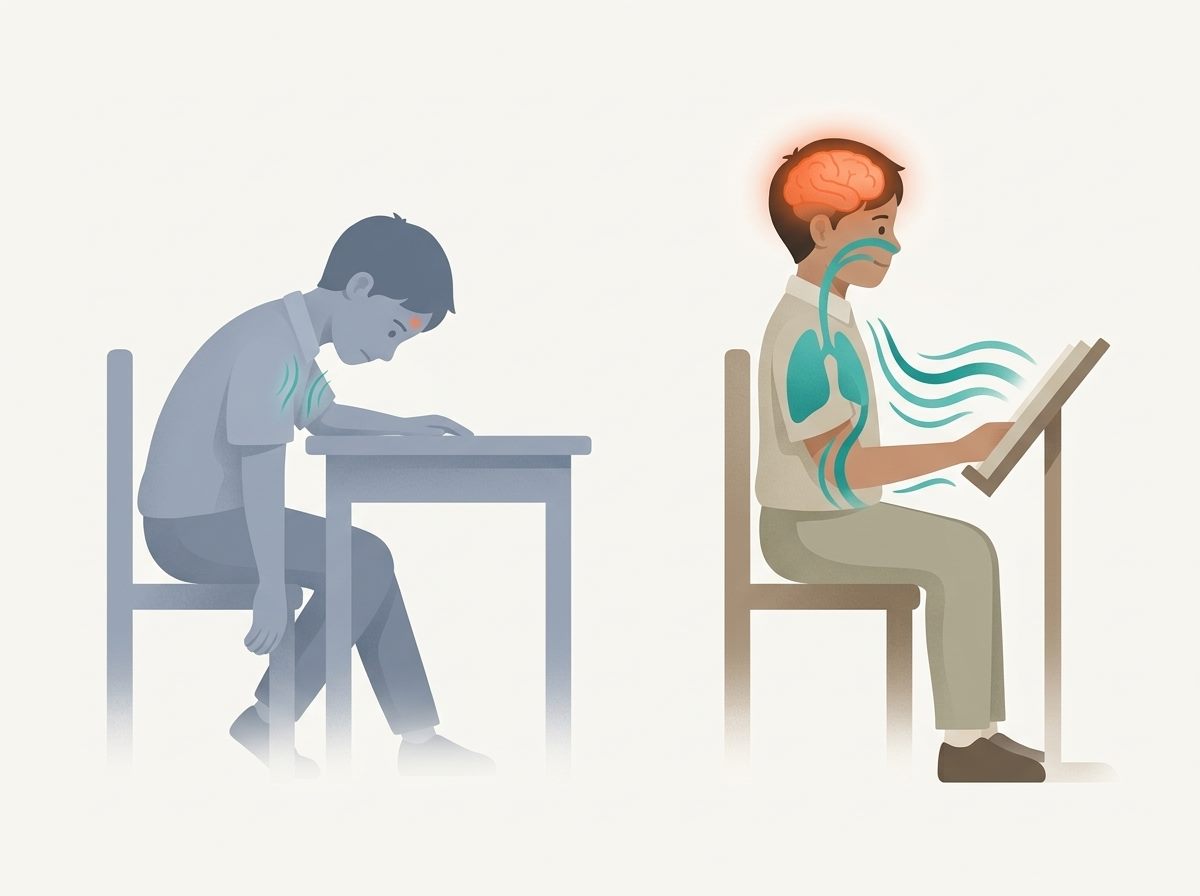
When a child sits for a long time, many switch to shallow chest breathing: quick, small breaths high in the chest instead of slower, deeper breaths using the diaphragm. Over a lesson, this can mean a less steady oxygen supply, and the result often looks like tiredness, restlessness or “zoning out”.
Signs to look out for
- Full of energy outdoors, but fades quickly at the desk or during homework.
- Frequent yawning, sighing or long breaths in class.
- Slouching, resting the head on the hand or the desk.
- Focus that drops sharply in the afternoon.
- Breathing that looks fast and high in the chest when sitting still.
One sign on its own means little. A pattern of several is worth checking.
How we check it at BrainLab 360
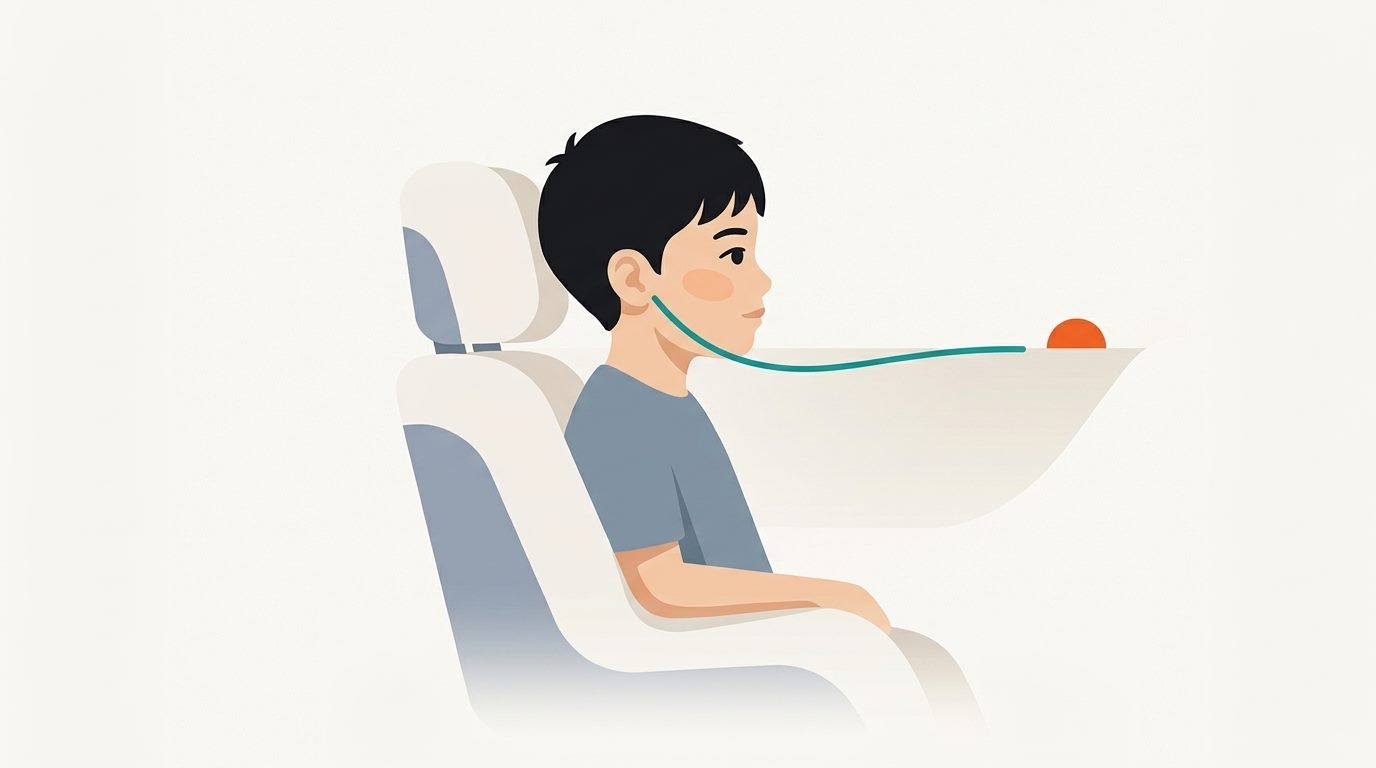
We use a digital spirometer to measure lung capacity, both standing and sitting. Comparing the two shows whether sitting posture is limiting how freely your child can breathe. For reference, typical ranges we use for children aged 6–12 are about 1,200–2,200 ml for boys and 1,100–2,100 ml for girls; adults are usually higher. Results are always read together with age, height and the rest of the assessment.

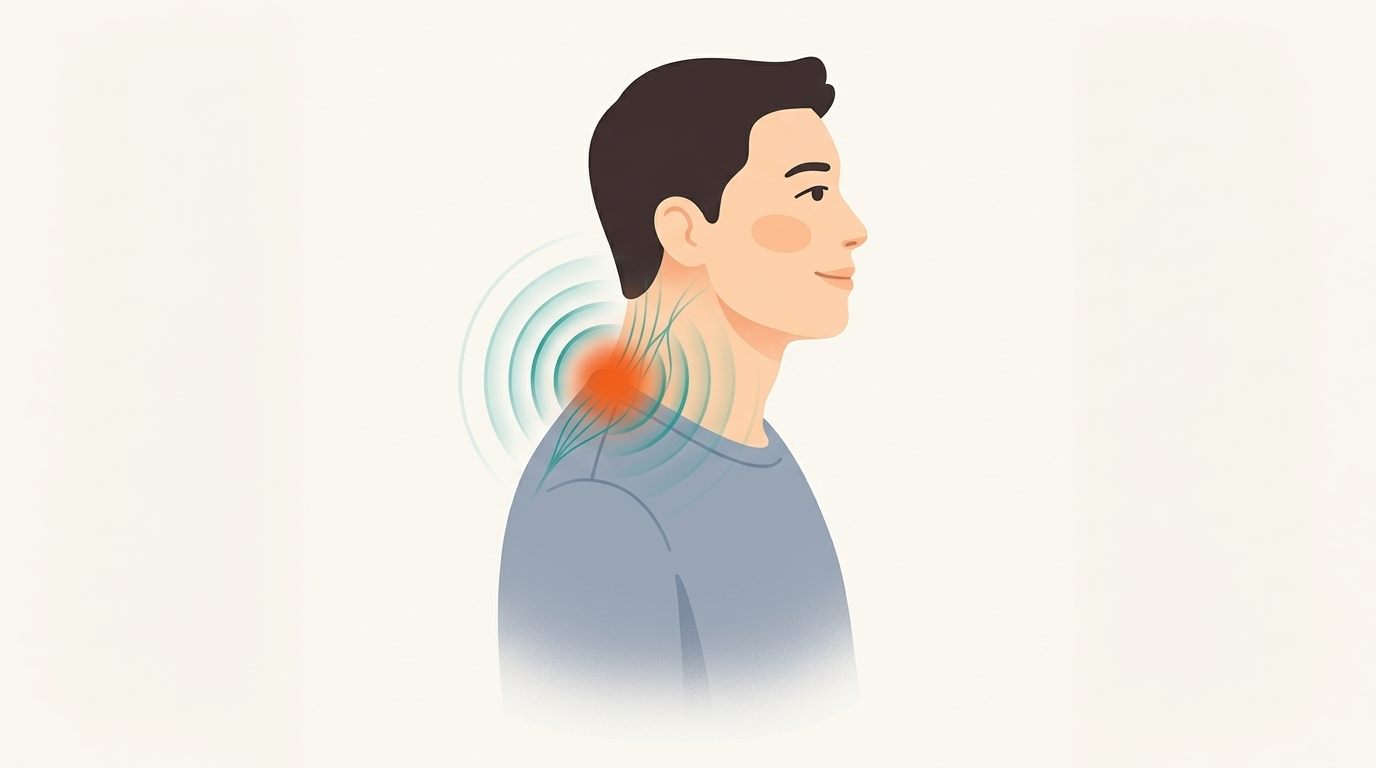
Breathing is one of four checks in our brain and body assessment, alongside balance, neck stability and a 12-skill brain profile, because focus usually depends on several of these working together.
Simple things you can try at home
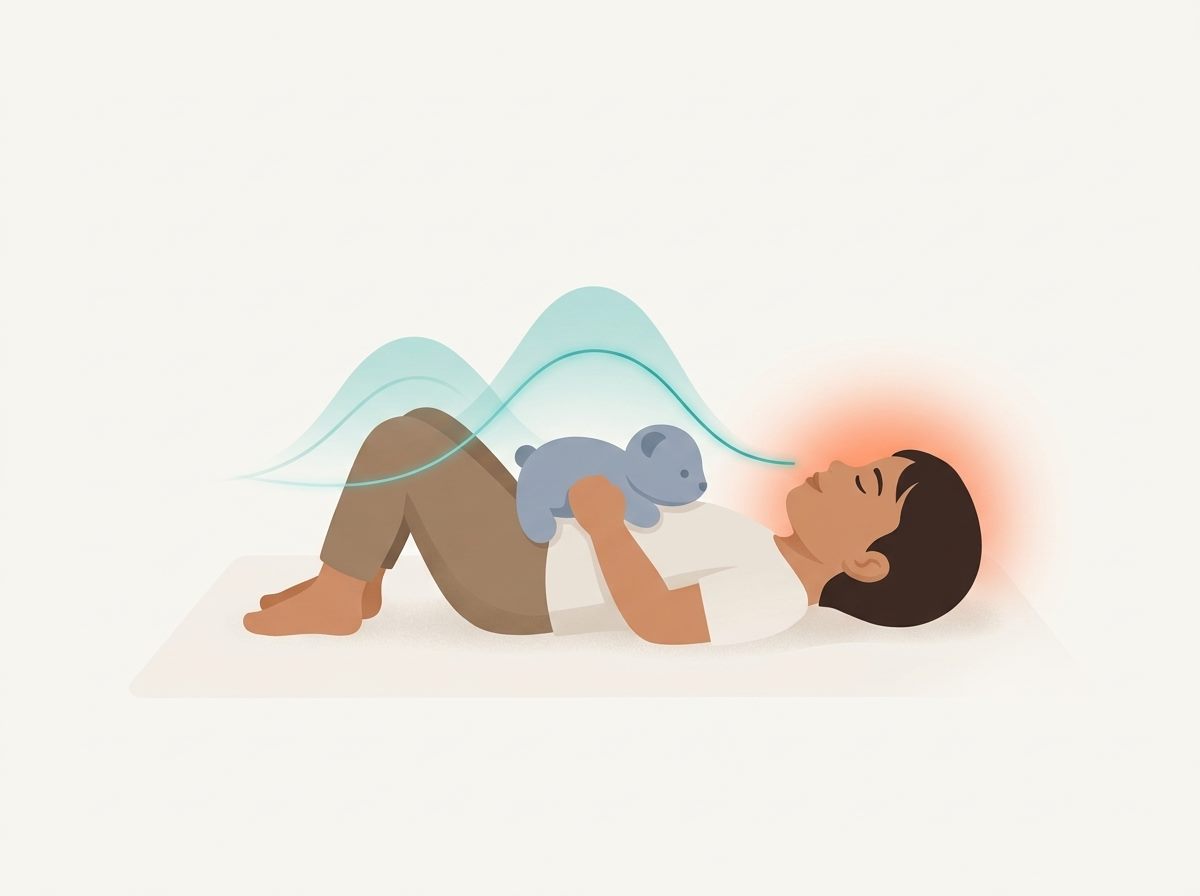
- Movement breaks: every 20–30 minutes of homework, stand up, stretch and walk for a minute.
- Belly breathing: lie down with a soft toy on the tummy and watch it rise and fall slowly for 5–10 breaths.
- Desk set-up: feet flat, back supported, books raised a little so the head is not dropped forward.
- Sleep and outdoor play: both support steady energy during the school day.
Want to know what is behind it for your family?
Ask about a gentle brain & body checkup →This article is general education, not medical advice. BrainLab 360 provides non-invasive functional assessment and training; it does not diagnose or treat medical conditions. If you are worried about a medical condition, please see a doctor.